Introduction
In many AEC teams, the words code compliant and design validated are used interchangeably. A model passes internal checks, rules are satisfied, and the team moves forward with confidence—until authority comments arrive and challenge assumptions no one realized were fragile.
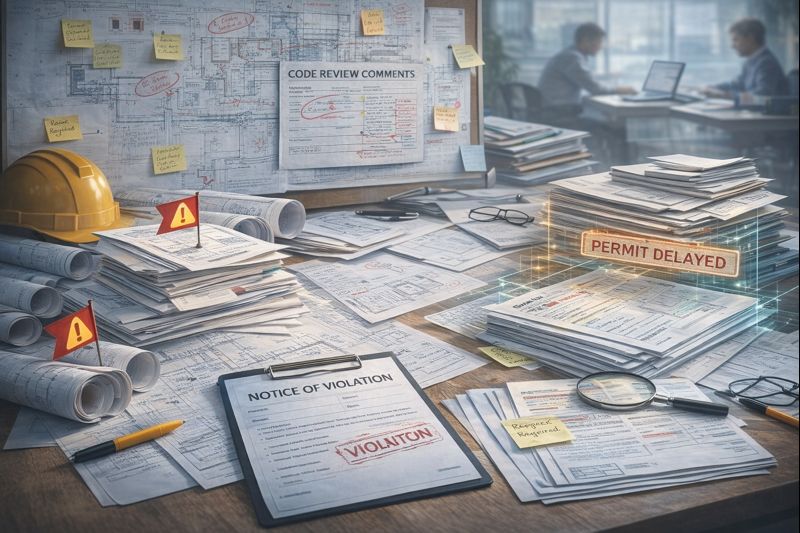
This gap between “passing checks” and “getting approved” is one of the most persistent sources of rework in regulated AEC projects. Teams do what they believe is required, yet approvals still stall.
The reason is simple but often overlooked: code compliance and design validation are not the same discipline. Understanding the difference is essential for reducing approval risk, especially in complex projects across jurisdictions like the USA and UAE.
Why Code Compliance Feels Sufficient—Until It Isn’t
Code compliance is attractive because it appears objective. Requirements are written. Rules are defined. If a design meets them, it should pass.
In practice, compliance checks answer a narrow question:
Does this element satisfy a stated requirement?
Authorities, however, ask a broader question:
Does this design demonstrate understanding of intent, context, and risk?
When teams focus exclusively on compliance, they often miss the second question entirely.
Design Validation Operates in the Gray Areas
Design validation lives where codes are not explicit.
It examines:
- How assumptions interact across disciplines
- Whether borderline decisions are defensible
- How intent is demonstrated, not just satisfied
For example, a stair may meet dimensional requirements but still raise concerns if circulation logic feels unsafe. A fire strategy may technically align with code but conflict with authority precedent. These issues do not appear in rule-based checks, yet they drive review outcomes.
Validation addresses these gray areas by questioning appropriateness, not just correctness.
Why Authorities Review Designs Differently Than Software
Authorities do not evaluate projects line by line against rule sets. They review holistically, informed by experience, precedent, and risk awareness.
They ask:
- Is this solution reasonable for this building type?
- Does it rely too heavily on exceptions?
- Are multiple assumptions compounding risk?
A design can be compliant in isolation but still feel risky in aggregate. This is why projects that “pass all checks” can still receive extensive comments.
The Danger of Treating Compliance as the Finish Line
When teams treat compliance as the end goal, validation happens implicitly—if at all.
This creates several risks:
- Borderline decisions are not discussed openly
- Assumptions remain undocumented
- Review focus shifts to fixing comments instead of preventing them
Over time, teams become reactive. They wait for authority feedback to tell them what validation they missed.
How AI Helps Bridge Compliance and Validation
AI-assisted validation does not replace compliance checks. It builds on them.
Instead of stopping at rule satisfaction, AI systems can:
- Identify combinations of compliant elements that historically trigger comments
- Highlight design patterns associated with review friction
- Surface areas where multiple borderline decisions overlap
This shifts review conversations from “Is this allowed?” to “Is this likely to be challenged?”
Platforms such as Ruwaq Design support this approach by applying AI-driven pattern analysis to design data, helping teams understand where compliant designs may still carry approval risk—before authorities point it out.
Validation Makes Assumptions Explicit
One of the most valuable outcomes of validation is transparency.
When teams validate designs properly, they:
- Identify where assumptions are being made
- Decide whether those assumptions are acceptable
- Document rationale for future reference
This transforms authority review from a guessing game into a dialogue. Even when comments arise, teams can respond confidently because they understand the reasoning behind their decisions.
Why Validation Reduces Rework More Than Extra Checking
Adding more compliance checks does not necessarily reduce rework. It often increases noise.
Validation reduces rework by:
- Catching risky decisions early
- Preserving design intent before it hardens
- Preventing late-stage reversals
This is especially important in projects where changes ripple across multiple systems.
The Cultural Shift Required Inside AEC Teams
Moving from compliance-driven thinking to validation-driven thinking requires a mindset change.
Instead of asking:
- “Did we pass the check?”
Teams ask:
- “Would we approve this if we were the authority?”
AI supports this shift by making risk visible, not by issuing judgments. It encourages discussion, not automation dependency.
Why This Distinction Matters More in Multi-Jurisdiction Projects
In projects spanning different authorities or regions, compliance alone is insufficient. Requirements may be similar on paper but interpreted differently in practice.
Validation helps teams adapt designs to local expectations without relearning lessons the hard way on each project.
Conclusion
Code compliance is necessary, but it is not enough.
Design validation addresses what compliance cannot: interpretation, intent, and risk. Projects that confuse the two often pass internal checks but fail external review in costly ways.
AI-assisted validation helps AEC teams bridge this gap by highlighting where compliant designs may still be vulnerable. Not to replace professional judgment—but to support it with visibility and context.
For teams operating in regulated environments, understanding the difference between compliance and validation is no longer optional. It is central to delivering projects that move smoothly from design to approval.